


Hello hooman friends and fellow lunar snackers! 🐵✨
It’s me again — your friendly neighborhood jazz chimp, Marcel Du Chimp — reporting live from under the fattest, roundest, most delicious-looking moon of the year.
Ah yes, the Mid-Autumn Festival — a night when the moon inspires a dessert, that can also double as a container of secret messages in case you wanted to start a revolution:
🥮 Secret Messages in Pastry
Long, long ago (before Wi-Fi, TikTok, or bubble tea), clever revolutionaries in China came up with a truly magical way to send encrypted messages:
They hid secret notes inside mooncakes!
No USB drives. No spy apps. Just lotus paste and rebellion.
The plan was passed from hand to hand, disguised as dessert — because who would suspect a pastry of plotting an uprising? And the best part? Even if you got caught, you could eat the evidence.
🧧 1. The Legend: How Mooncakes Helped Start a Revolution
The tale most often told goes back to the Yuan Dynasty (1271–1368), when China was under Mongol rule. The native Han Chinese population was oppressed, and secret communication among rebels was dangerous — the Mongol authorities were strict, their spies everywhere.
So how do you organize a massive uprising without getting caught?
Through dessert, of course. 🍰
Zhu Yuanzhang, the future founder of the Ming Dynasty, was then leading an underground resistance movement. His brilliant military strategist, Liu Bowen (刘伯温), came up with a plan to hide secret messages inside mooncakes.
At that time, the Mid-Autumn Festival was one of the few occasions when people were allowed to exchange gifts freely — even among different villages. So, boxes of mooncakes could be passed around without raising suspicion.
🥮 2. The Message Inside
According to legend, the rebels printed or carved tiny notes and hid them inside the mooncakes.
Each note carried the same message, something like:
“Kill the Tatars on the fifteenth day of the eighth month.”
(八月十五杀鞑子)
The phrase gave both a date (August 15th on the lunar calendar — the Mid-Autumn Festival) and an action — the signal for a coordinated nationwide rebellion against the Mongols.
When the moon rose full and round that night, the rebels struck simultaneously — their timing flawless, their communication hidden in plain sight.
The uprising succeeded, and Zhu Yuanzhang eventually overthrew the Yuan Dynasty to establish the Ming Dynasty (1368–1644).
🔥 3. The Aftertaste of Symbolism
After the revolution, the mooncake became more than just a festive treat — it became a symbol of unity, hope, and resistance.
The round shape of the mooncake represented reunion and wholeness, but also the cycle of return and renewal — a poetic reminder that even under oppression, harmony can be restored.
So every year, when people eat mooncakes under the bright Mid-Autumn moon, they’re not just celebrating family togetherness — they’re also unconsciously remembering that once upon a time, these pastries helped to liberate an entire nation.
🧠 4. Historical Plausibility vs. Legend
Modern historians agree that while the story may not be literally true — there’s little concrete evidence of actual mooncake messages — it captures the spirit of the Ming revolution perfectly.
It reflects how Chinese storytelling often blends fact, symbolism, and myth into something richer and more meaningful. Whether or not the notes existed, the metaphor of sweet rebellion has stuck for over 600 years.
🌕 5. A Monkey’s Reflection
If you think about it — mooncakes were the ancient world’s USB drives, passing encrypted data between users with zero Wi-Fi and total flavour.
The message was revolutionary, the delivery system was edible, and the moon itself — the silent witness — was glowing approval from above.
So next time you take a bite, imagine you’re tasting not just lotus paste or egg yolk, but a small crumb of revolutionary genius.
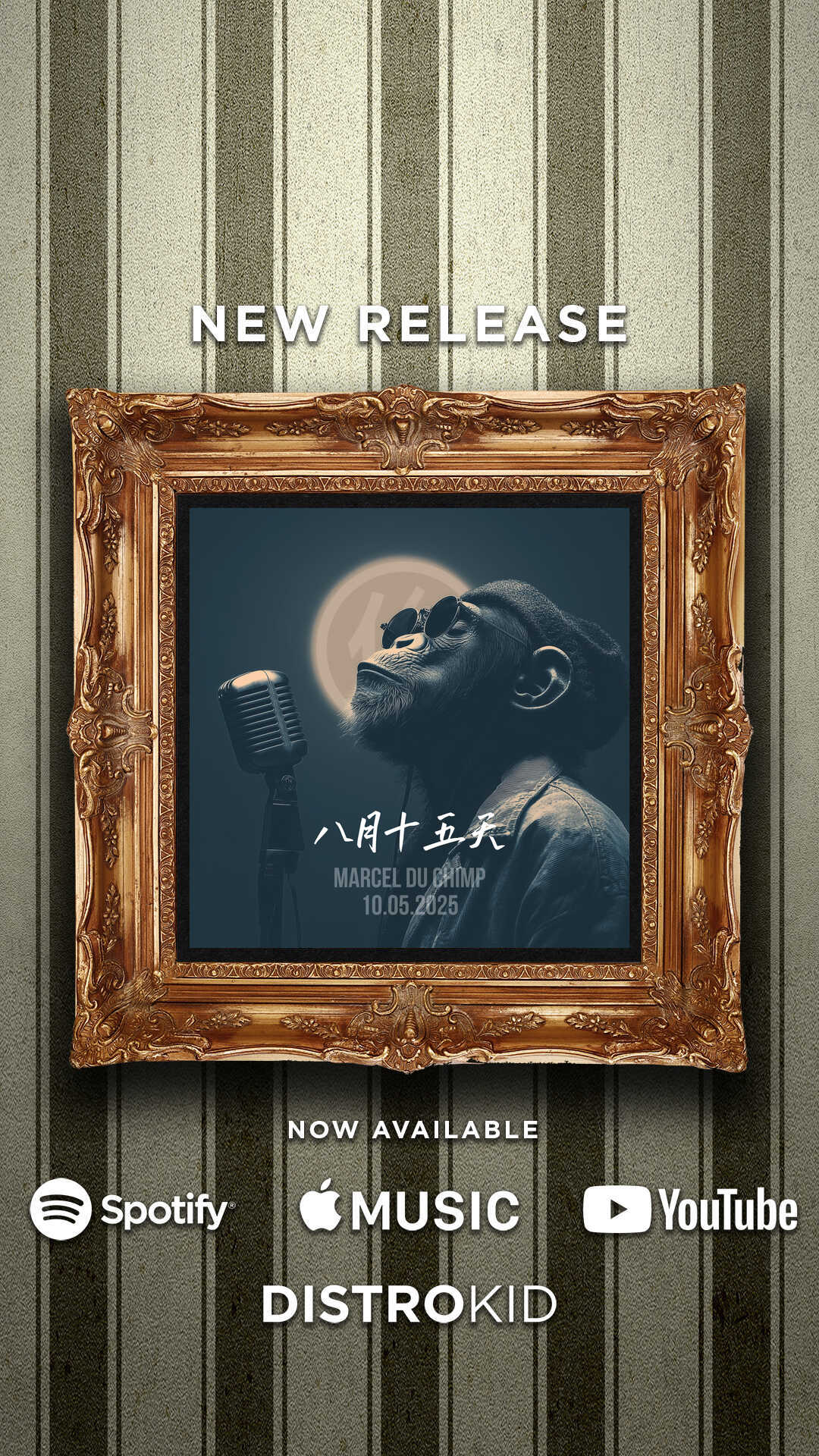
… and after all that, let's not forget about my new single release for today!
A song designed to play in the background while you eat moon-cakes!!!
Untill next time!
Eat well and enjoy the moonlight!
Marcel